The sequencing error
The instinct on discovering a tax exposure is to correct the return immediately. It feels responsible, and there is usually a deadline pressing. But a return is an output. It is derived from the accounting records, and if those records are unreconciled — bank balances that do not agree, suspense items nobody has cleared, supplier invoices missing — then the corrected figure comes from the same unreliable source as the original.
The exposure has not been resolved. It has been restated, with a new number that is no better evidenced than the first. And the correction has consumed a remedy that may not be available twice: as covered under correcting an incorrect VAT201, the self-correction facility closes once SARS completes a verification or issues a revised declaration.
What reconciliation establishes that correction cannot
Reconciliation is not tidying. It establishes four things that a corrected return, standing alone, asserts without proving.
That the bank position in the records agrees to the bank's own record of the same period — which is the only independent confirmation most SMEs have that the transaction population is complete. That control accounts agree to their supporting detail, so the VAT control account can be tied to the returns actually filed. That material transactions are supported by documents capable of withstanding scrutiny. And that opening balances agree to the prior period's closing position, without which no single period can be corrected in isolation, because the period inherits an error it did not create.
Why SARS treats the two differently
A correction with a reconciliation behind it can be substantiated on request. A correction without one cannot — and the request comes routinely, through a verification letter under section 46 of the Tax Administration Act.
At that moment the position is materially worse than the original error had been. The taxpayer has now positively asserted a figure it cannot evidence. That distinction matters for penalty purposes: the understatement penalty table in section 223(1) of the Tax Administration Act distinguishes between behaviours, and whether reasonable care was taken is assessed on what the taxpayer can demonstrate. A documented reconciliation process is evidence of care. A corrected return with nothing behind it is not.
The legal obligation sitting underneath
There is a company-law dimension that tax-focused discussion often omits. Section 28 of the Companies Act 71 of 2008, read with Regulation 25, requires a company's accounting records to be complete and accurate, and Regulation 25(2) requires them to provide an adequate information base to satisfy the company's reporting requirements and to permit the compilation of financial statements and the proper conduct of an audit or independent review.
Records that cannot support a tax position generally cannot satisfy that standard either. The tax exposure is frequently the first symptom to surface, because SARS has fixed deadlines and asks direct questions, but it is rarely the only consequence of the underlying condition.
The commercial case for doing it in order
Reconciling first looks slower and is usually cheaper. The reason is that errors are rarely confined to one period.
A miscoded supplier, a recurring transaction mapped incorrectly, an assumption about a zero-rated supply — these repeat until something surfaces them. Correcting period by period against unreconciled records means discovering the pattern on the fourth or fifth correction, by which time earlier corrections are inconsistent with later ones and each inconsistency needs its own explanation. Reconciling first reveals the pattern once, and produces a single coherent position across every affected period.
Where the resulting liability is material, sequencing also preserves options. As set out under tax debt and cash flow, remedies such as the Voluntary Disclosure Programme require full and accurate disclosure and are only available before SARS initiates an audit or investigation. A business correcting piecemeal, without knowing its full position, cannot make that disclosure — and each partial correction increases the chance of triggering the enquiry that closes the door.
Sector patterns
Certain models make the sequencing failure more likely. In construction, project-based accounting with retentions, work in progress and subcontractor certificates means the VAT position depends on cut-off decisions that are themselves unreconciled — correcting the return without first agreeing the underlying WIP position tends to move the error rather than remove it. In agriculture, long production cycles and consignment arrangements produce the same effect from a different cause: the period a transaction belongs to is a judgement, and correcting one period in isolation shifts the problem to its neighbour.
The order of work
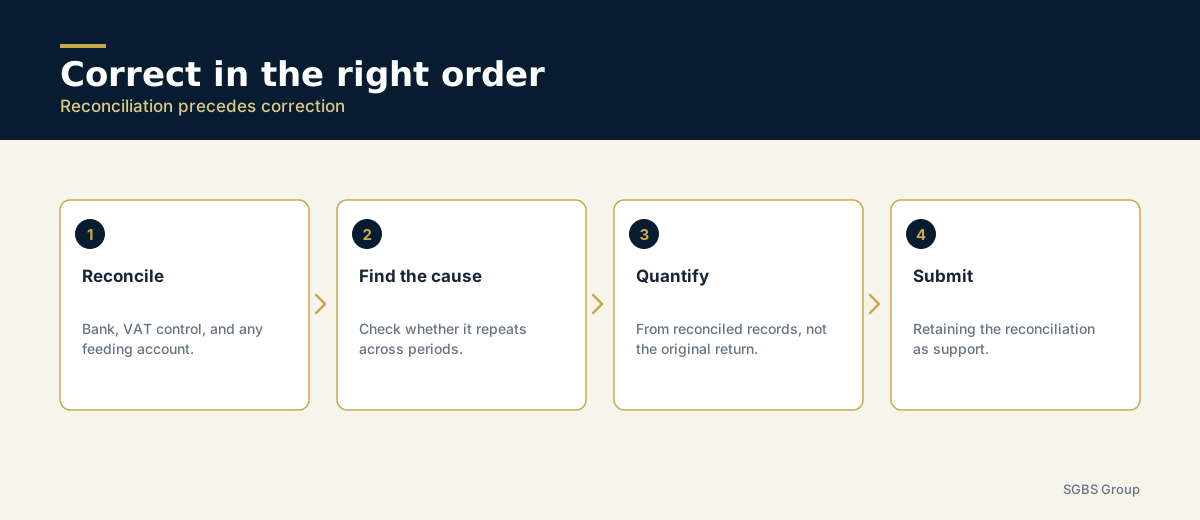
- Reconcile the affected periods — bank, VAT control, and every account feeding the disputed figure — before quantifying anything.
- Identify the root cause and test whether it repeats across adjacent periods. Assume it does until shown otherwise.
- Quantify the corrected position from the reconciled records, across all affected periods together.
- Decide the remedy on the full picture — correction, objection or voluntary disclosure — rather than defaulting to whichever is fastest.
- Submit, retaining the reconciliation as the support file. It is the evidence of care if the position is ever questioned.