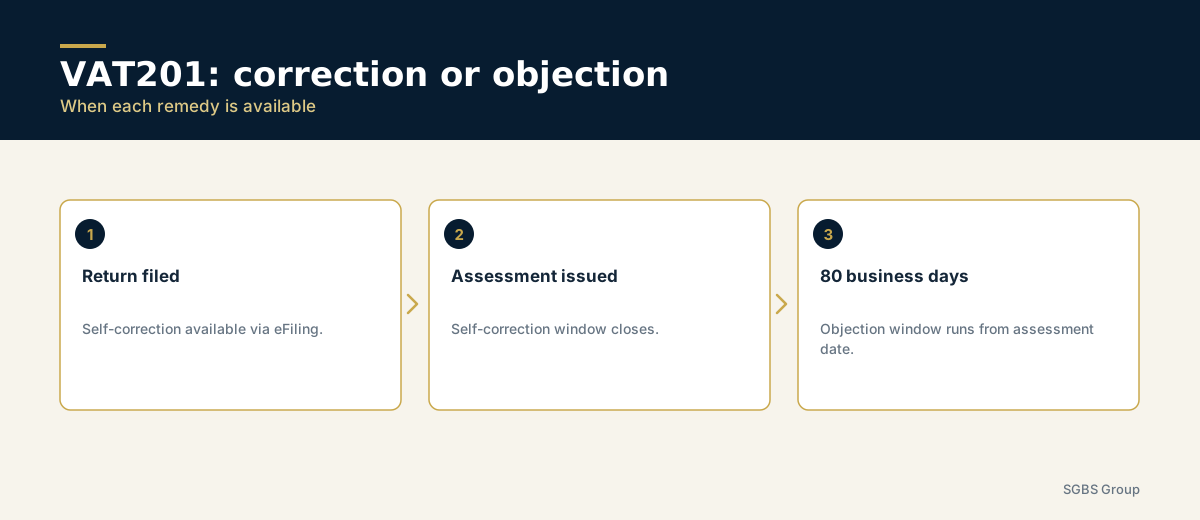
When a correction is available
SARS permits self-correction through eFiling using the Request for Correction facility. The application creates an additional VAT201 for the same period under the same payment reference, reflected as a new version of the original return.
It is not always available. The facility falls away where an audit or verification case has already been completed on that period, or where SARS has itself issued a revised declaration. In those circumstances the remedy is no longer correction but objection, which runs on a different and much more formal footing.
The limitation almost nobody plans for
A Request for Correction cannot be used to increase input tax on a VAT201.
This catches businesses regularly, because the intuitive use of a correction is precisely to claim something that was missed. Where additional input tax should have been claimed, the deduction must instead be taken in a subsequent VAT period rather than by amending the period it related to. That is a timing consequence rather than a loss of the deduction, but it needs to be planned for — particularly where a business is reconstructing several periods at once and expects to recover a large input position by amendment.
Why errors rarely stay in one period
A single miscoded transaction is unusual. Most VAT201 errors are systemic in origin: a supplier set up with the wrong VAT treatment, a recurring transaction type mapped to the wrong code, an incorrect assumption about a zero-rated supply. These repeat silently until something surfaces them, which means a "single period" correction is very often a multi-period review wearing a disguise.
This is why the sequencing matters so much. Correcting one period against records that have not been reconciled tends to create inconsistencies between adjacent periods that are harder to explain than the original error — the reasoning set out under reconciling before correcting.
Penalty and interest exposure
Interest runs from the original due date, not from the date the error was discovered. Correcting late does not reset that clock, which means the cost of delay accrues quietly while the position is being investigated.
Understatement penalties sit on top, and their severity depends on how SARS characterises the taxpayer's conduct. The understatement penalty percentage table in section 223(1) of the Tax Administration Act runs across a range of behaviours, from a substantial understatement at the lower end through to gross negligence, where the penalty reaches 100%, and intentional tax evasion above that. The gap between categories is where the commercial exposure really lives: the same understated amount can attract a materially different penalty depending on whether reasonable care can be demonstrated.
That is a documentation question as much as a conduct question. A business that can show a reconciliation process, a review step and a documented reason for the treatment adopted is in a very different position from one that can only show the return.
The commercial case for correcting early
Voluntary, early correction is almost always cheaper than the alternative, and the reason is not only penalties.
An uncorrected error compounds into the compliance status that governs tender eligibility and lender confidence. For a business in a bidding sector — construction and mining contracting in particular, where prequalification routinely turns on tax standing — an unresolved VAT position can cost a contract worth many multiples of the tax in dispute. The tax is quantifiable; the lost bid is not, and it does not appear in any reconciliation.
The third route most businesses do not consider
Where the understatement is material and the conduct is likely to be characterised harshly, the Voluntary Disclosure Programme is often the better route than a quiet correction. A successful application under the VDP relieves the understatement penalty entirely and provides relief from criminal prosecution for the disclosed default, leaving the tax and interest payable.
The critical condition is that the disclosure must be voluntary — made before SARS has notified the taxpayer of an audit or investigation into the affected period. That timing requirement is absolute, and it is the reason the decision cannot be deferred. A business that suspects a material understatement and waits to see whether SARS notices has, by waiting, given up the option that would have removed the penalty. Once a verification letter arrives, the door on that period has closed.
The trade-off is disclosure scope: a VDP application requires full and complete disclosure of the default, which in practice often surfaces more than the business initially intended to raise. That is precisely why the exposure should be quantified across all affected periods before an application is made, not during it.
Deciding which route applies
Three questions settle it in most cases. Has SARS already completed a verification or audit on the period, or issued a revised declaration? If so, correction is closed. Is the change an increase to input tax? If so, it belongs in a later period regardless. Is the disagreement about the facts, or about the law? A factual error caught early is a correction; a dispute about SARS's legal position was always an objection.
Where several periods are affected, or where the answer to any of those questions is unclear, establishing the full position first is materially cheaper than correcting periods individually and discovering the pattern afterwards. The Tax Risk Diagnostic™ is built to scope that before any submission is made.