Processing is not closing
Most businesses that believe they close monthly are in fact processing monthly. Transactions are captured, the system produces a trial balance, and a report is issued. Nothing in that sequence tests whether the figures are right, and nothing prevents them changing afterwards.
The distinction matters because a close is a control. Its purpose is to produce a position that can be relied upon — by management making decisions, by SARS receiving a return derived from it, and by the auditor or independent reviewer who will later test it. Regulation 25(2) under the Companies Act frames this directly: accounting records must provide an adequate information base to satisfy the company's reporting requirements and permit the proper conduct of an audit or independent review.
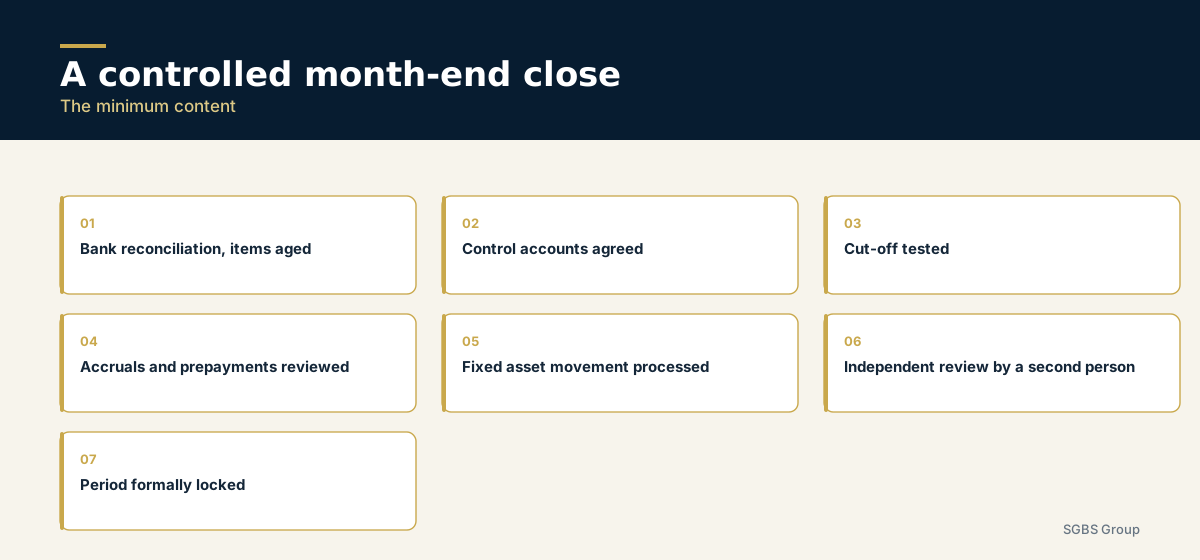
The minimum content
Bank reconciliation for every account, with reconciling items aged and explained rather than merely listed. An item that has been outstanding for four months is not a reconciling item; it is an unresolved difference wearing one.
Control account reconciliations — VAT, PAYE, debtors, creditors, loan accounts — each agreed to its supporting detail. The VAT control account should tie to the returns actually filed, which is the comparison that matters if the period is ever verified.
Cut-off testing. Revenue and expenses recorded in the period they relate to, not the period they were invoiced or paid. This is where most misstatement originates, and it is almost never caught by the system.
Accruals and prepayments reviewed and adjusted, so the period carries its own costs and the margin reported is the margin earned.
Fixed asset movement — additions, disposals and depreciation processed and agreed to the register, which is also the record that determines the deemed-supply position if the business ever deregisters for VAT.
Independent review of the completed pack by someone who did not prepare it.
Formal close — the period locked, so figures cannot change after review without a documented reason.
The step almost everyone omits
The lock. Where prior periods remain open, reported figures can shift retrospectively without anyone noticing, which means management reporting, the VAT return and the annual financial statements can each have been built on a different version of the same month.
This produces a specific and awkward failure: the VAT201 filed in March no longer agrees to the accounting records in September, because a journal was posted into a period everyone considered finished. Nobody did anything improper. The period was simply still editable, and the reconciliation that supported the return no longer reconciles. Under a verification request that difference has to be explained, and the honest explanation — that the records changed after filing — is not one that inspires confidence.
A period that can still change is not closed.
Why review is not optional
Self-review is not a control. The reviewer's function is to ask the questions the preparer has stopped asking: why did this balance move, why does this accrual repeat, why is this reconciling item still open, why is the margin different from last month.
The preparer cannot ask those questions effectively because they made the decisions being tested. This is not about competence or trust — it is the reason segregation exists as a principle at all, and it is the same logic that makes spreadsheet-based records problematic, as covered under why spreadsheets do not create financial control.
Timing, and why it is a commercial question
A close that lands six weeks after period-end has limited decision value even when it is accurate. By the time the numbers arrive, the month they describe is history and the decisions they should have informed have been taken on instinct.
The practical target for most SMEs is a reviewed pack within ten to fifteen working days. That is early enough for the figures to still describe a situation management can act on — a margin slipping, a customer stretching payment, a cost line moving.
The commercial cost of a slow close is therefore not the accounting fee. It is every decision taken in the interval on incomplete information. For businesses in retail and commerce, where gross margin and stock movement need weekly attention rather than quarterly, a slow close means pricing and buying decisions are made blind. In professional services, where the equivalent measures are utilisation and work in progress, a delayed close means recovery problems are discovered a quarter after the work was done and the opportunity to bill has passed.
Building the discipline without adding headcount
The obstacle is rarely capability. It is that the close competes with operational work and loses, because nothing breaks immediately when it slips.
Three practices make the difference in smaller teams. Fix the date rather than the intention — the close finishes on working day twelve, and what is incomplete on day twelve is escalated rather than silently deferred. Use a written checklist signed off item by item, so that "reconciled" means a specific person confirmed a specific thing. And where the same review point recurs for three consecutive months, treat it as a process defect to be fixed at source rather than an adjustment to be repeated — which is the difference between a close that improves and one that merely repeats.